It was an early spring day in Anchorage as I stood in line at the Nesbit Courthouse. The snow was finally melting. The brain fog that had consumed me, turning every conversation toward the trial of a killer – a man found guilty of murdering two Alaska Native women – was finally lifting.
In March we started protesting around the fact that a man, Ian Calhoun, who was implicated in one of the murders was not being investigated or charged. He had known about the woman, texting with Smith during the gruesome torture, meeting with him later at a park when she was in the back of Smith’s pickup truck, the canopy covering the woman’s body, Smith later describing her as a “mannequin”.
She was not a mannequin, she was a woman with friends and family who loved her, the life of Kathleen Jo Henry, only 30, ended by Smith as he narrated the gruesome videos recorded on his phone; the phone that ultimately led to his arrest.
September 4, 2019: The day Smith was torturing and murdering Kathleen Jo Henry at a hotel in Anchorage, Alaska
12:54am
Smith: “Heh. U up. I’m having fun.”
7:08am
Calhoun: “I was not up, sounds like you were having a lot of fun.”
9:16am
Smith: “Hi”
Smith: “I did have fun. Wanted to share.”
Calhoun: “We need to get together for a drink soon.”
Smith: “Are you anywhere near me today?”
Ian “What? I’m in Anchorage yes”
Calhoun: “But I’ll be working until 4-ish”
9:20am – Smith admitted to having Kathleen in the back of his truck at this point
Smith: “I have something to show you. Something I can’t keep for too long.”
3:36pm
Smith: “I will be finishing at 4:30. Need to find a secluded spot to meet.”
Calhoun: “Okay I should be off pretty close to then.”
4:46pm
Smith: “Heh. I am at a small park close to your home. You finish work yet?”
Smith: (sent map location pin Forsyth Park 11301 Birch Rd. Anchorage, AK 99516) – a park near Calhoun’s residence.
4:53pm
Calhoun: “Give me one minute”
They were at this location for about 10 minutes together per phone information gathered by FBI
In 2019 Ian Calhoun was a 22 year old drummer and previous co-worker of Smith’s. He had messaged Smith after a body was found along the Seward Highway south of Anchorage.
October 2, 2019 when Kathleen’s remains found on Seward Highway
Facebook messages between Smith and Calhoun
12:55pm
Calhoun: (sent link of KTUU news article about human remains found on Seward highway near Beluga Point mile 108)
12:57pm
Smith: “oops”
Calhoun: “As soon as I saw it”
Calhoun: “knew I should send you a text”
Smith: “I’m surprised it took so long. In a few weeks snow would have covered it.”
Calhoun: “I was kinda hoping that it would hurry and snow”
Calhoun: “me too from what was said lol”
Calhoun: “but that means I’ll be in the clear”
1:20pm
Smith: “There is something else I must tell. I will talk next week. But keep an eye on this about any leads. Can’t talk. Not alone. Everyone is upset that I am carrying my phone around on vacation.”
Calhoun: “Gotcha, we’ll get together soon.”
Smith: “I get back Tuesday and noon but if I go into work a few hours then they won’t take it as a leave day.”
6:12pm
Calhoun: “Okay keep me in the loop”
6:33pm
Calhoun: “So can I now say that I’m trained?”
The casual tone of the messages introduced as evidence in Smith’s February 2024 trial five years later were jarring to the dozen of us sitting in the court room. It implied conversations about bodies were not new to them.
Calhoun did not testify in the trial. His attorney, Wally Tetlow, argued for Calhoun’s Fifth Amendment right not to incriminate himself.
Calhoun wasn’t charged with anything, and when we learned there was not an investigation, we did what we could. We formed a Facebook page and started organizing around a protest.
Legally, the only charge available was a minor violation – a mere $500 fine. No investigation into other crimes he may have been implicated in with Smith were pursued, leaving us outraged.
Weeks later, as we stood in the court clerk line at the Nesbett Courthouse to request records, the three of us were still searching for answers to the questions the 17-day trial had brought to light.
March 2024 – The Protests Begin
The protests about Ian Calhoun began in mid-March, the temperature hovering around 25 degrees as a half dozen of us stood outside of the courthouse. We demanded to be heard.
We had signs. “ARREST IAN CALHOUN NOW” “WE DO NOT FEEL SAFE” and “HONK 4 JUSTICE” written in red paint on white poster board.
Our second protest was a dozen of us holding signs. Heavy jackets, warm hats, and most of us wearing gloves as we held signs. Our breath visible as we chanted ARREST IAN NOW!, we faced the Anchorage Police Departments sleek six-story glass building, initially built as a Legislative Information Office, and only a block from the courthouse where Smith was found guilty of the 14 charges related to two murders, Veronica Abouchuk and Kathleen Jo Henry.
Smith had sat in the padded swivel chair in the courtroom, often times a smirk on his face as the prosecution presented overwhelming evidence of the charges that included murder 1 and murder 2, sexual assault and evidence tampering, and the torture aggravator.
There were three of us that had started the organizing, Antonia Commack and Michael Livingston and myself. We decided to meet up at a coffee shop afterwards to warm up after the cold afternoon of the second protest.
It was apparent we were getting nowhere.
We knew there was more information out there, but how could we get that information?
I had met Antonia Commack at the trial that first afternoon I began going.
Valentines Day, a full week after trial had started. During the trial I noticed that I was the only other white woman in the courtroom besides Smith’s wife, who sat behind him, her shoulders shrinking daily, and the journalists covering the trial.
I had no idea what I would hear when I sat down that afternoon. I made the decision to continue to go after that first day. I was a sex worker, and had been for close to 20 years at this point. I needed to be witness to what was unfolding before me. It had been a sex worker, after all, that had finally put an end to his killing.
Alice, a fierce witty elder I had quickly befriended, nudged me, “You two need to meet” nodding towards the young woman who had passed by me to sit further down the court room benches, .
The woman was Antonia and she had been covering the Smith case on TikTok. She was a young Inupiaq woman with long, dark hair that cascaded down her back. When she spoke to someone she looked them straight in the eye. She was fearless yet had an unshakable calm energy. She never seemed overwhelmed, and was analytical yet could distill the dark and heart wrenching information into something you not only heard but where moved to understand.
She had been covering the countless stories of missing and murdered Alaska Native people that had been forgotten, ignored or fallen on deaf ears. The family members drained of energy by not being heard. Antonia was a bridge between the pain of the past and the promise of a different future where MMIP would be, could be, treated with respect and given the resources not only needed but deserved.
I had first heard Michael speak at the Data for Indigenous Justice Conference earlier that March.
Michael was an expert presenter and shared insight into a serial killer who preyed on sex workers in the 1980’s, Robert Hansen, from a police officers view. I had never said one word to him before our protesting began, but found him interesting and intelligent. At 5’9” with a broad face seemingly much younger than his 60-plus years on earth, Michael had an easy genuine smile and sharp, perceptive eyes framed by streaks of silver in his hair.
Dr. Michael Livingston had several degrees yet was one of the most humble humans I had ever met. He was a reserved man who seemed to effortlessly straddle the divide between two vastly different worlds; two decades in Alaska as a public safety officer, a detective, a firefighter, a dive rescue specialist, and an EMT.
Michael’s dark humor endeared me to see him as an ally. He could laugh through the hardest truths and still fight fiercely for what mattered. His language sometimes betrayed the biases of his years in law enforcement, especially when discussing sex work, yet, beneath the occasional misstep was a man whose wisdom and experience could not be denied, and whose willingness to learn made him invaluable to our small circle. The wisdom of his years spent safeguarding others came in handy for dealing with the things to come.
Michael was the protector among us, the one who reminded us to slow down and think things through, to breathe when our frustration threatened to overtake reason. His presence kept us centered, his voice logic. Except for his questionable choice of a few books, which he would recommend, send or buy for Antonia and me, arriving in the mail and prompting a “hey, I got this in the mail?” message on Facebook chat, the gesture itself spoke volumes about his belief in us.
If Antonia was the voice, Michael was the heart of our trio, the anchor who held us safe in turbulent waters, and the guide who made sure we never veered too far off the road ahead.
The three of us were all so different.
But we had one purpose.
Justice.
We had made the choice that evening after the second protest, over our coffees and soups, that I would try to visit Smith, the man I refer to as BS.
I do this, partly to dehumanize him as he called the women he murdered “it”, but also to refer to what I would come to hear from him during visits.
Bull shit.
The letters and paperwork sent to me from BS over the next few months gave me much more information than anything he had told me or what I had heard in trial. Still, that same paperwork had notes scribbled and underlined, giving voice to what he said was a “coerced confession,” although the details and information he willingly gave identified another woman the police weren’t even questioning him about; Veronica Abouchuk.
I had questioned my sanity, battled with increased anxiety, and started to suffer from some pretty intense realistic nightmares.
Weeks and many visits and letters later, I was standing in line for a copy of the grand jury transcripts from BS’s case and I hopped on one of the computers, typing in BS’s memorized case number, checking to see if anything new had been filed.
Strange.
There hadn’t been a small pdf graphic image next to the fillings when I had checked the records from my phone.
One stood out.
Hybrid Witness. Filed
| 01/03/2024 | Notice ST – Notice of Hybrid Witnesses |
And then another.
| 01/14/2024 | Notice Amended Notice of Hybrid Witnesses |
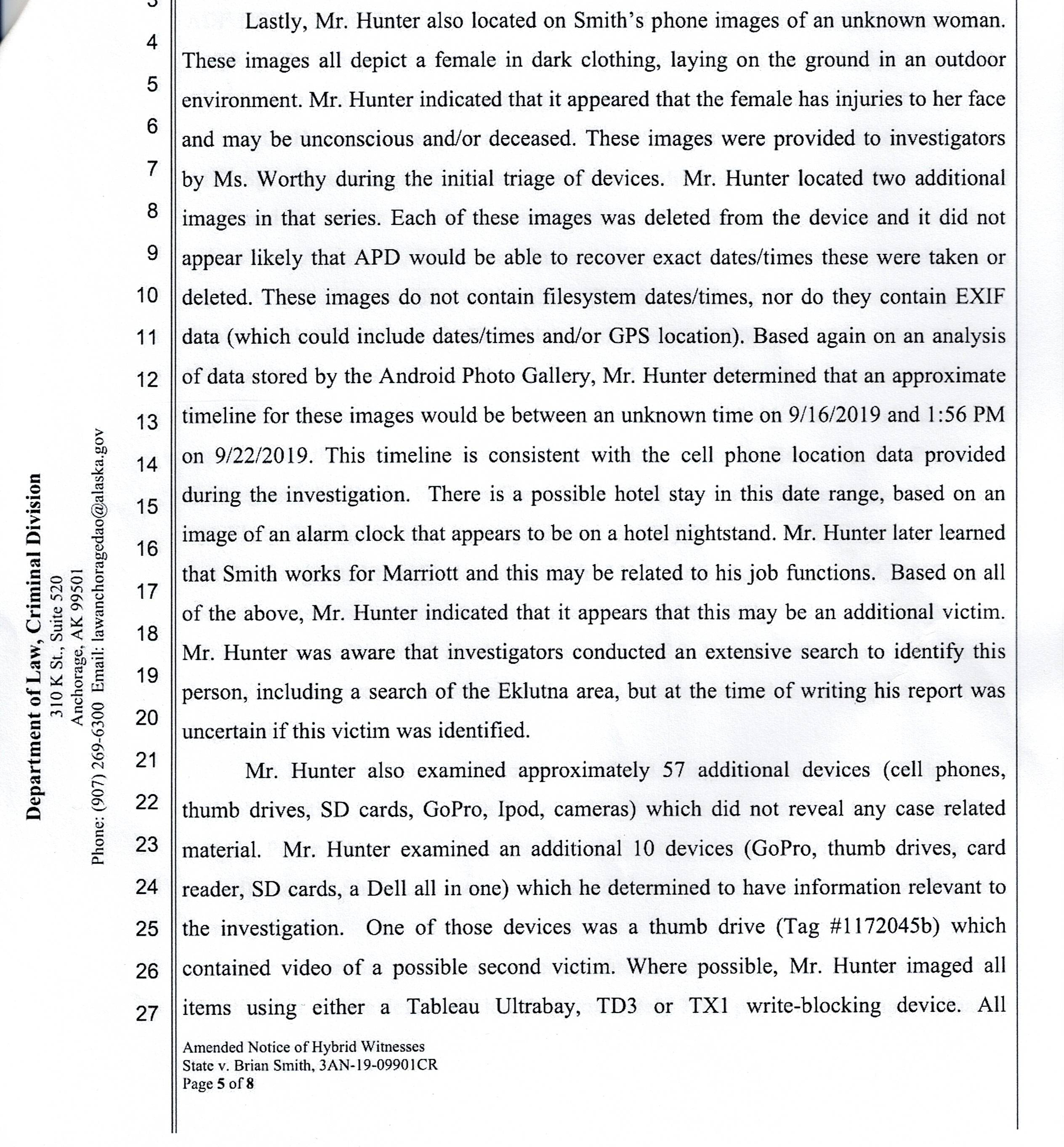
I had been receiving paperwork from BS regularly, but he had left this page out.
The Detailed Digital Forensics Analysis of Seized Devices Progress Report detailed of his two known victims, Veronica Abouchuk and Kathleen Jo Henry, and another picture shown at trial of him and another woman, with videos and images that do not depict anything “violent or unusual”.
Then, the report details, “Images of woman on ground”.

When I asked BS about the woman in the three images during one of our visits, his answer was typical. “She is just a friend I picked up, she was laughing ,we were laughing,” he had to told the cops the same thing during his interrogation when they had found the images on his phone, “She had fallen over as she was trying to piss, we were just laughing.”
In the additional legal paperwork dating back to October 8, 2019, investigators have continually written they do not know if the woman is deceased or alive in the images.
The recent developments related to her case have raised serious concerns about the handling of evidence and the investigation into Brian Steven Smith’s case by the APD.
The images were never entered into evidence at Smith’s trial in February 2024, nor discussed.
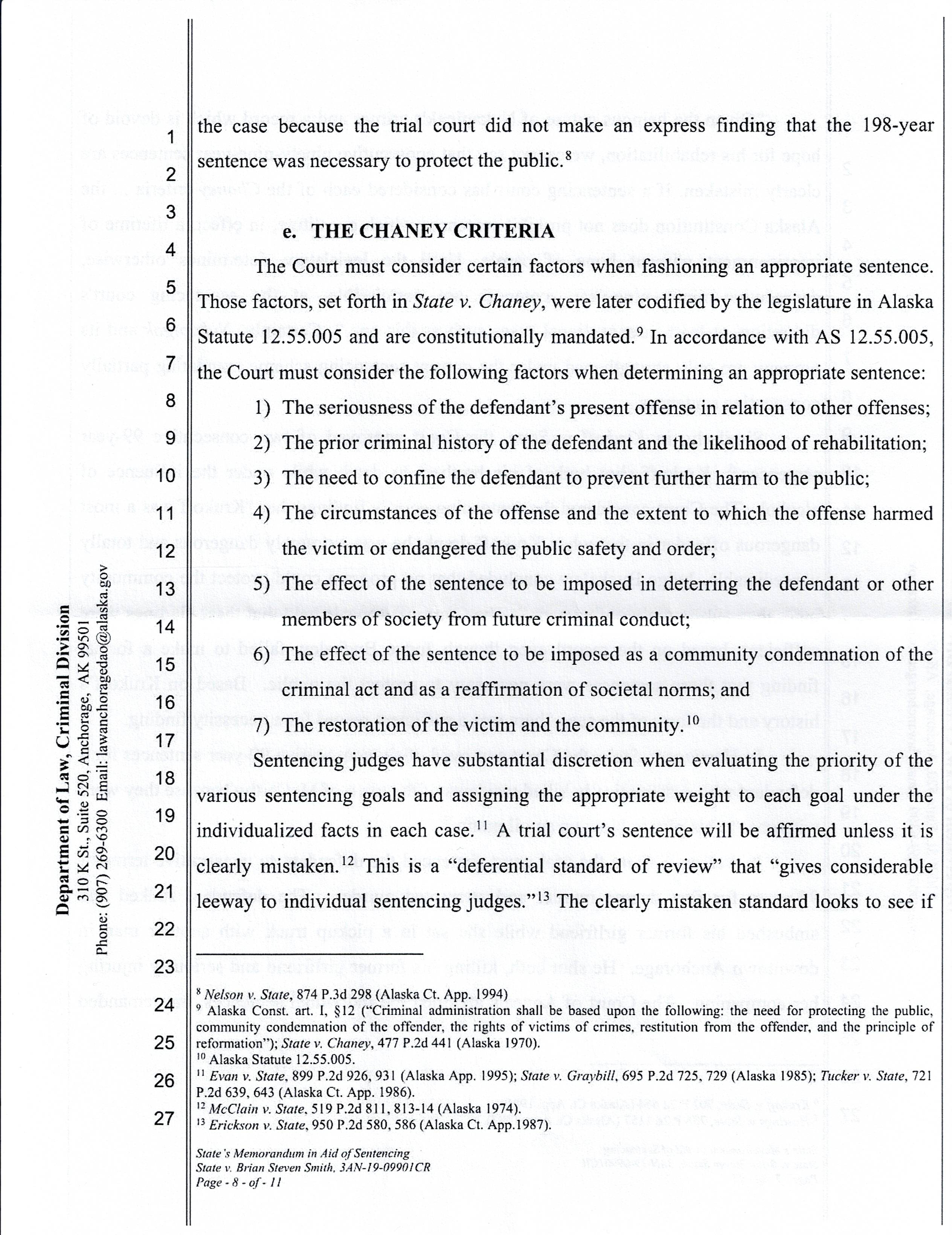
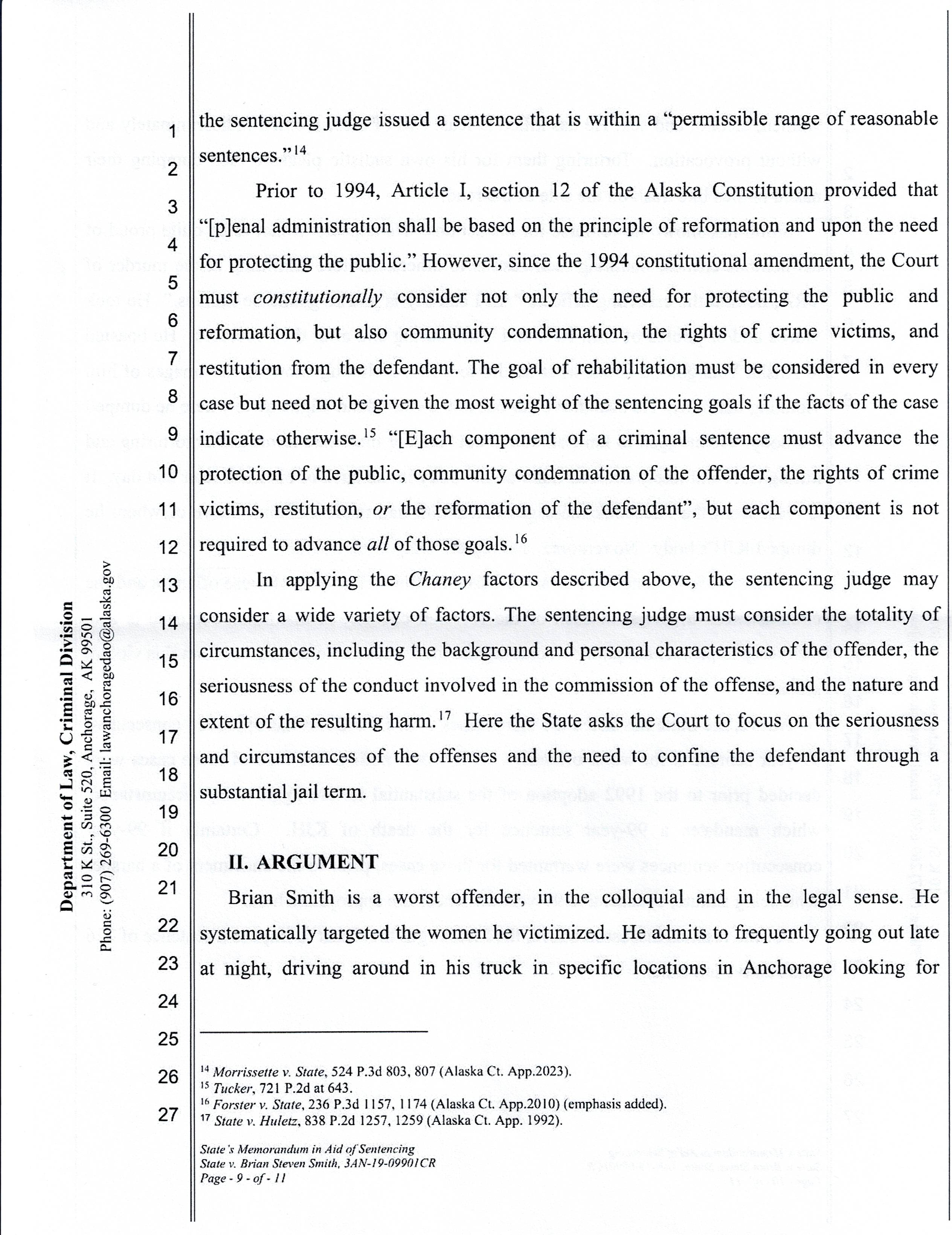
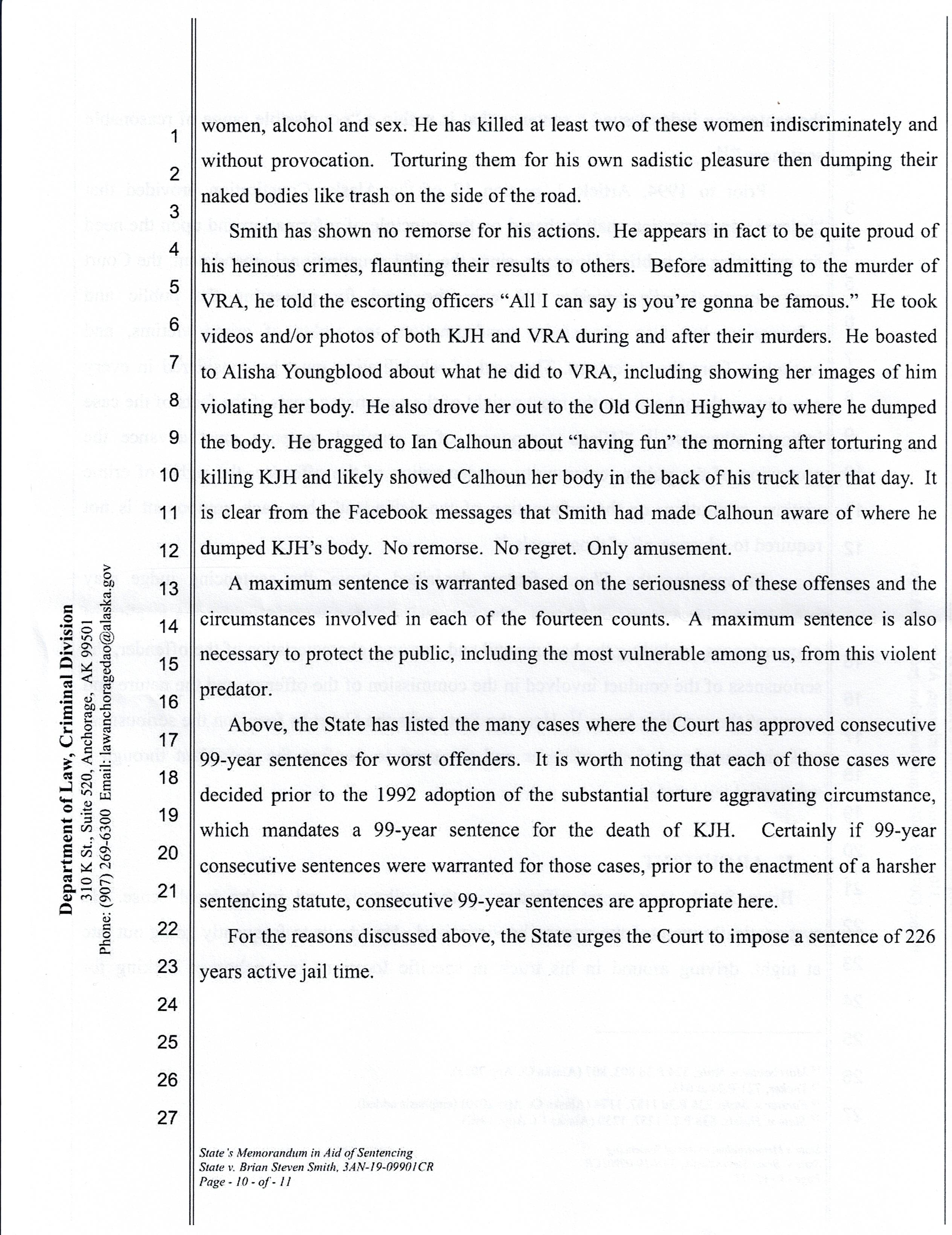
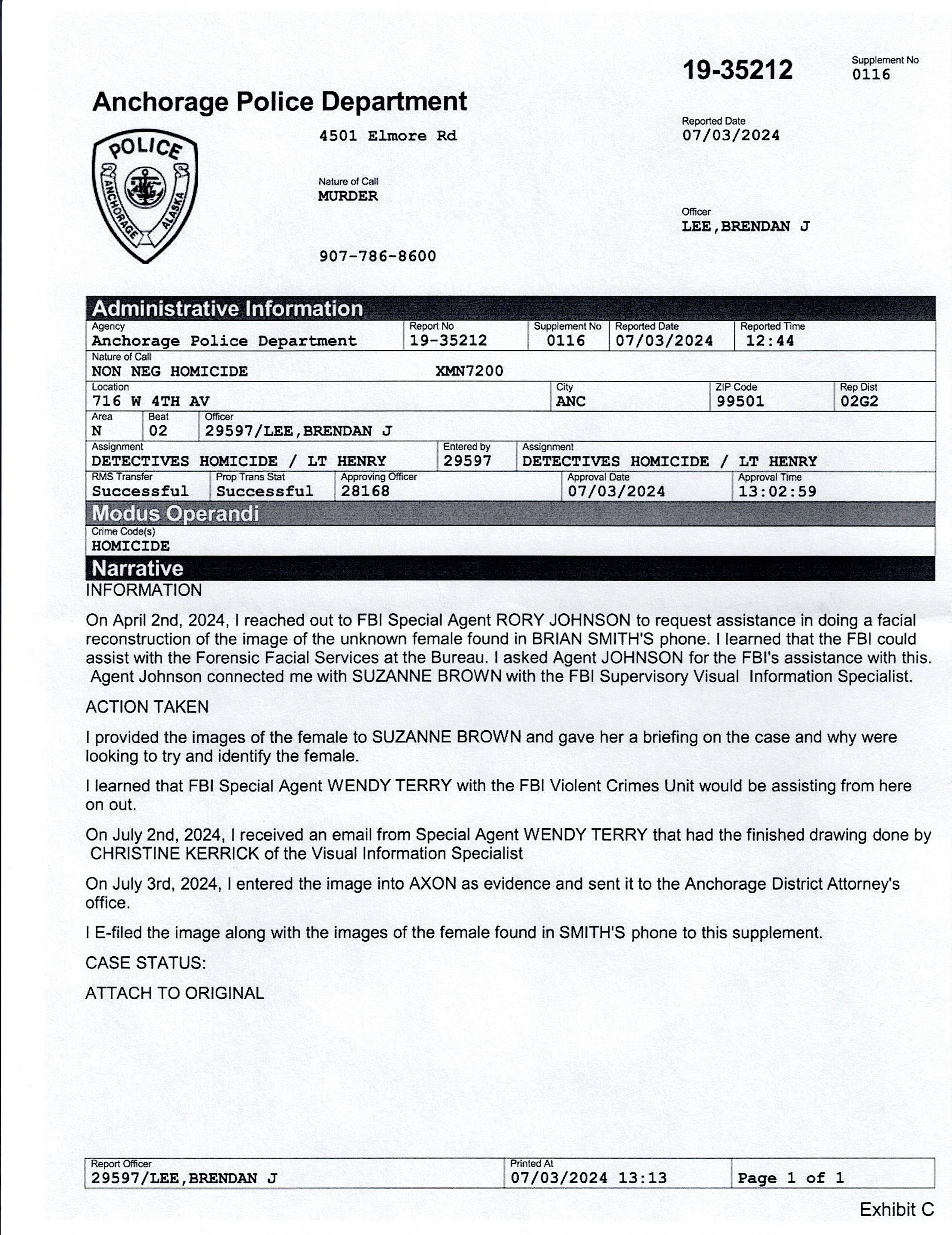
The images and forensic sketch were released in a Sentencing Memorandum for the sentencing of convicted murderer Brian Steven Smith, which took place on July 12, 2024.
There is a longer story behind those photos.
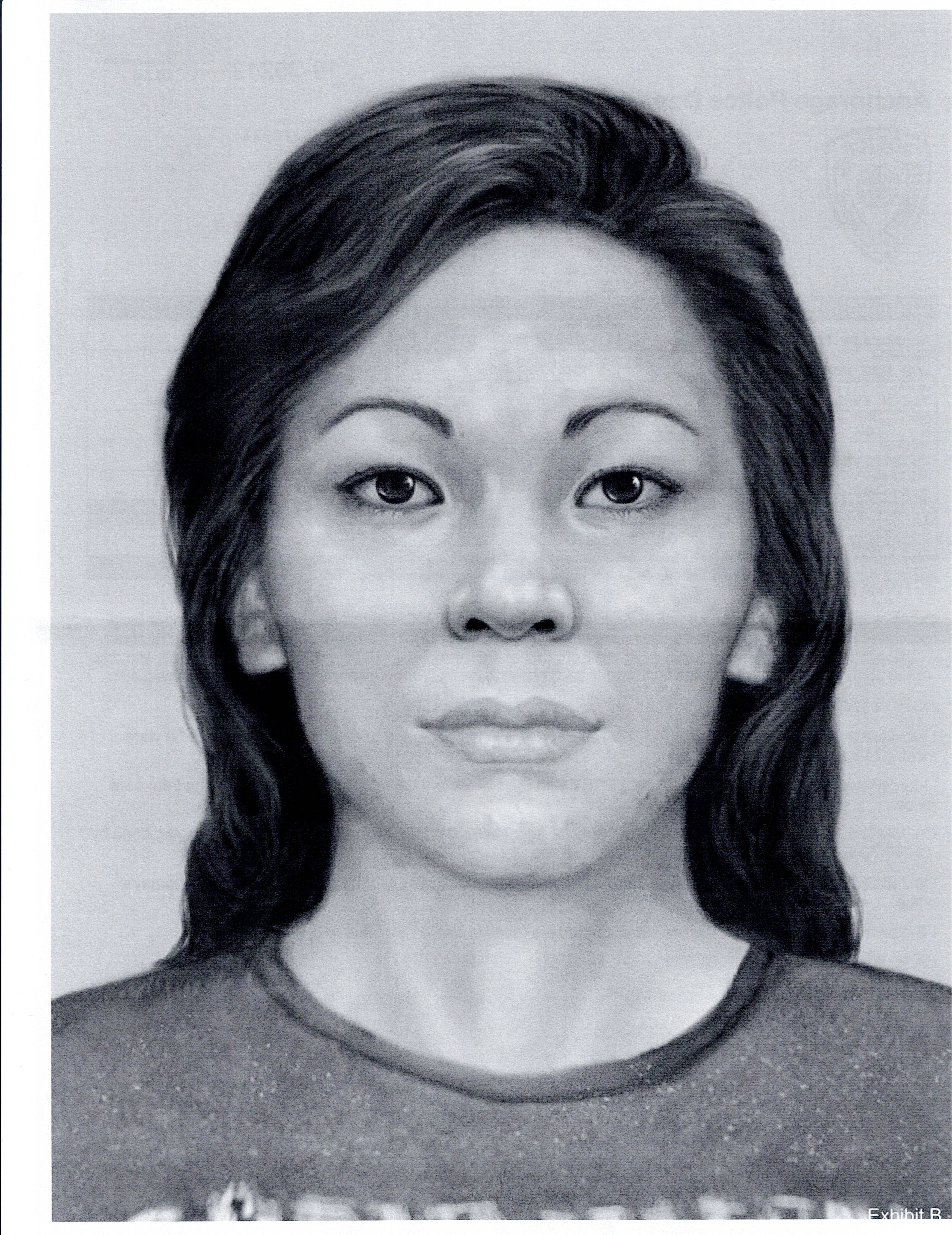
These images, which depict a woman beaten and likely deceased, were finally used to create a composite forensic sketch, which was entered into the Sentencing Memorandum, dated July 3, 2024.
The forensic artist drawing has not been shared by Anchorage Police Department (APD) yet APD says photos do not prove Alaska Native woman was murdered by Brian Smith.
I had been in Juneau for the 4th of July to visit friends and family and felt unsettled. I learned years ago to trust my instincts and when I checked online in the Courtview and saw a new filing had been entered into BS’s case on July 3rd I knew I needed to get back to Anchorage.
I flew home late that night, and headed to the courthouse the next morning, Friday, July 5th.
I printed the Sentencing Memorandum, 11 pages front and back and rushed back out to my car because I had only put some loose change in the meter and didn’t want another parking ticket. Crossing the street I glanced through the paperwork, thinking it was another wordy filing.
The three pictures of a woman laying outside were the last pages,
I got in my car and stared. I started shaking and crying. Putting my phone into the holder so I could read the entire Memorandum I tried calling Antonia and Michael on our messenger group.
No answer.
I didn’t want to look at the pictures until one of them were on the line with me. I had just stumbled upon something horrible and it angered me knowing it was right there, for anyone to go and find, readily available.
Michael called me back, and we talked on camera. After describing what I was looking at I took pictures, and sent to our three person group.
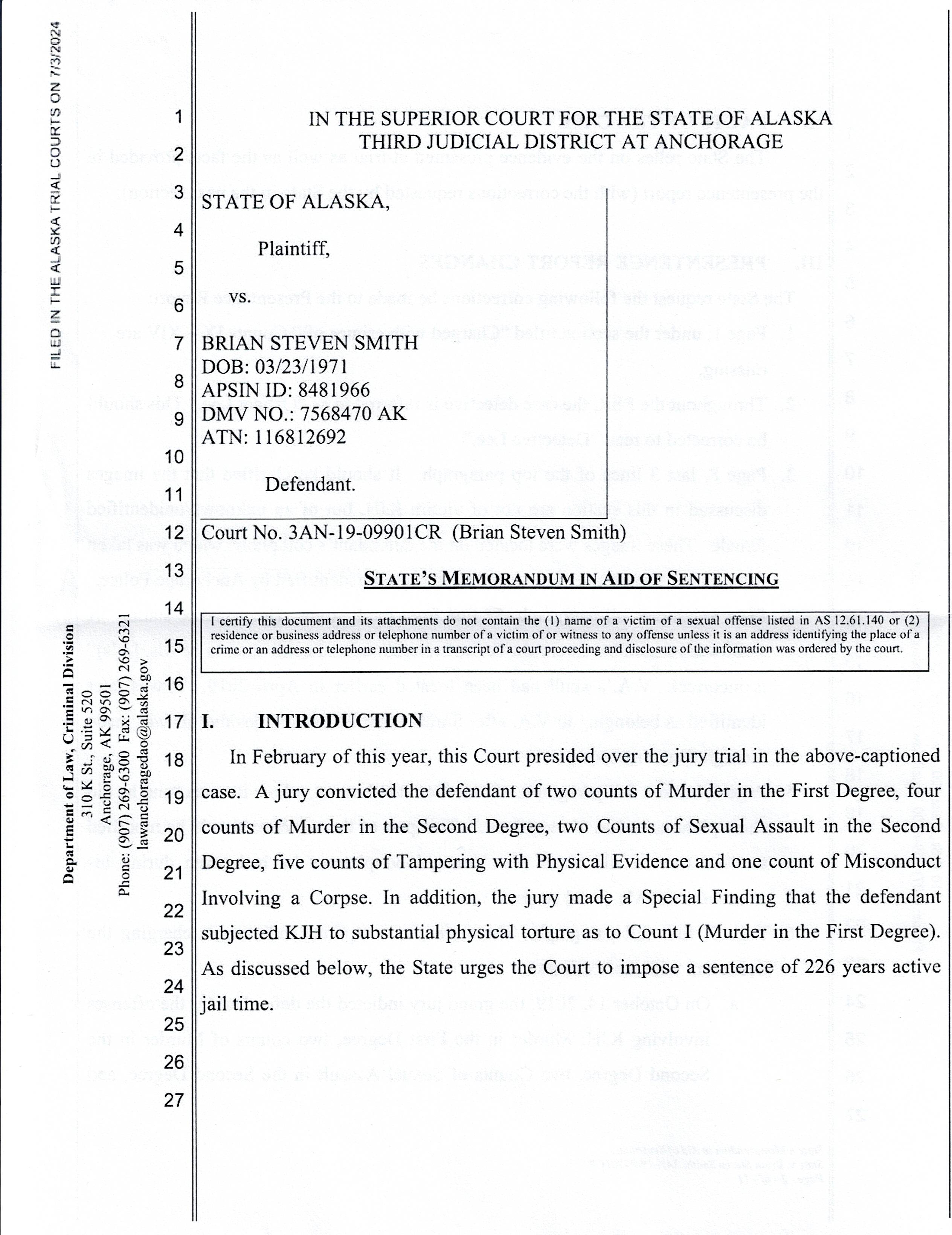
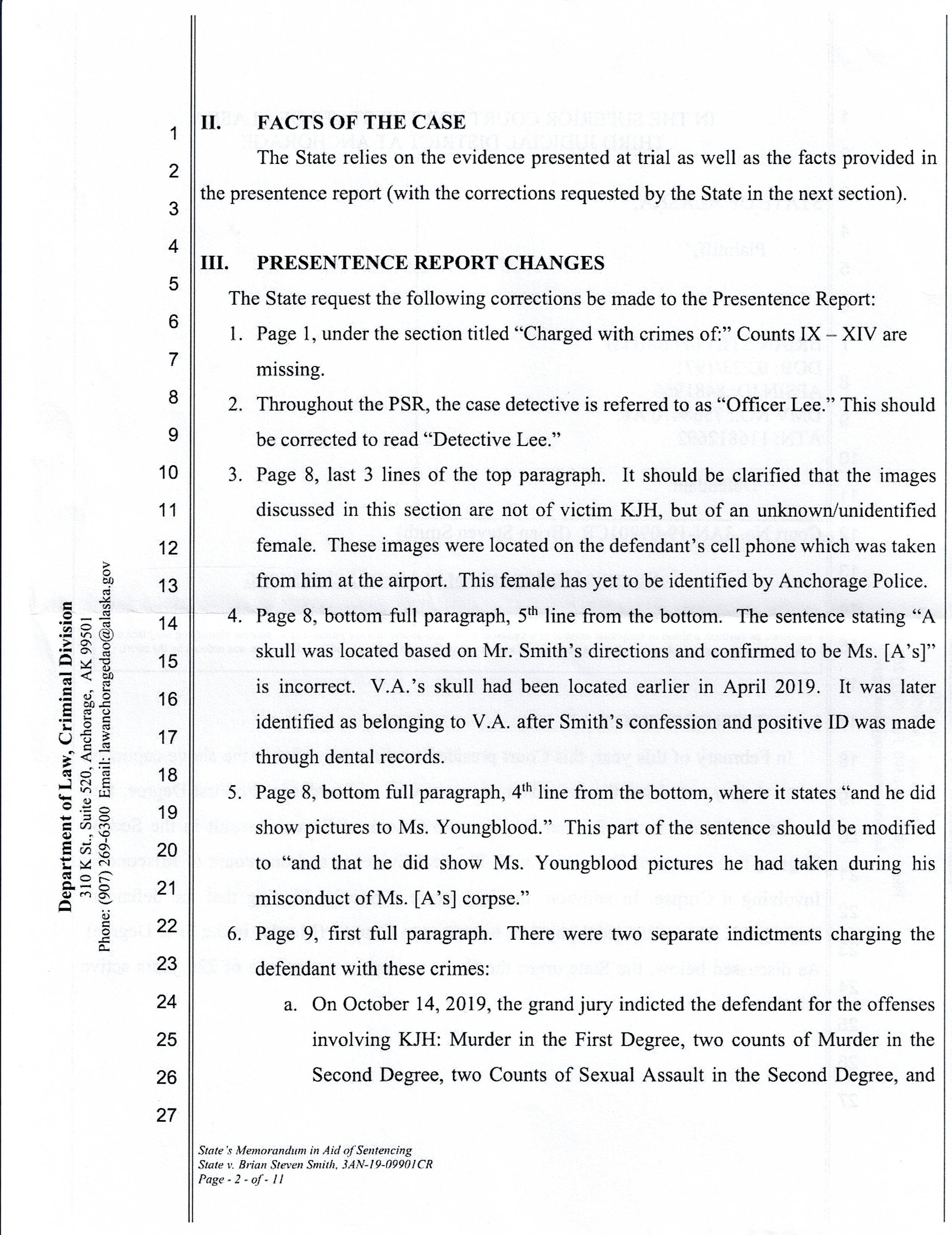
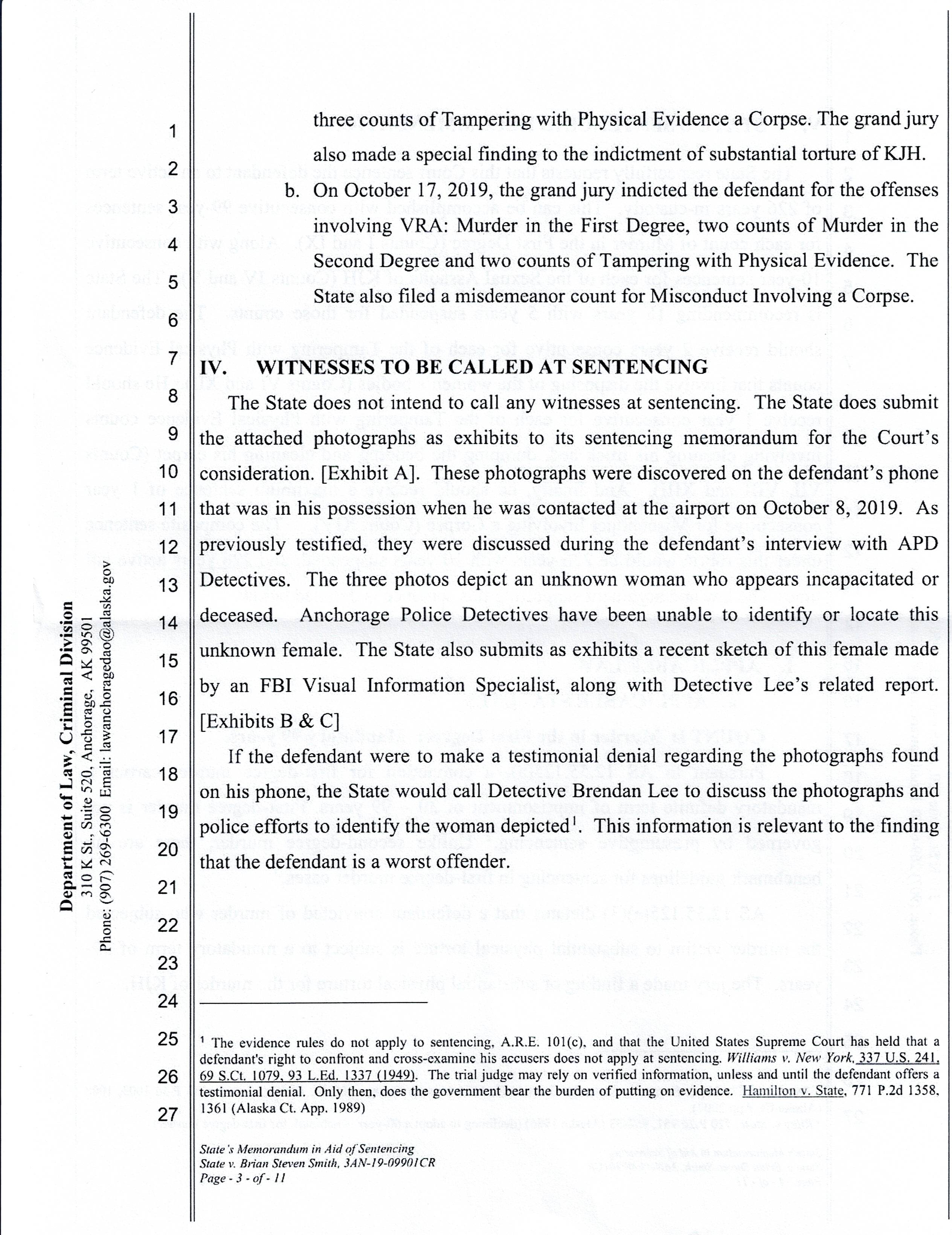
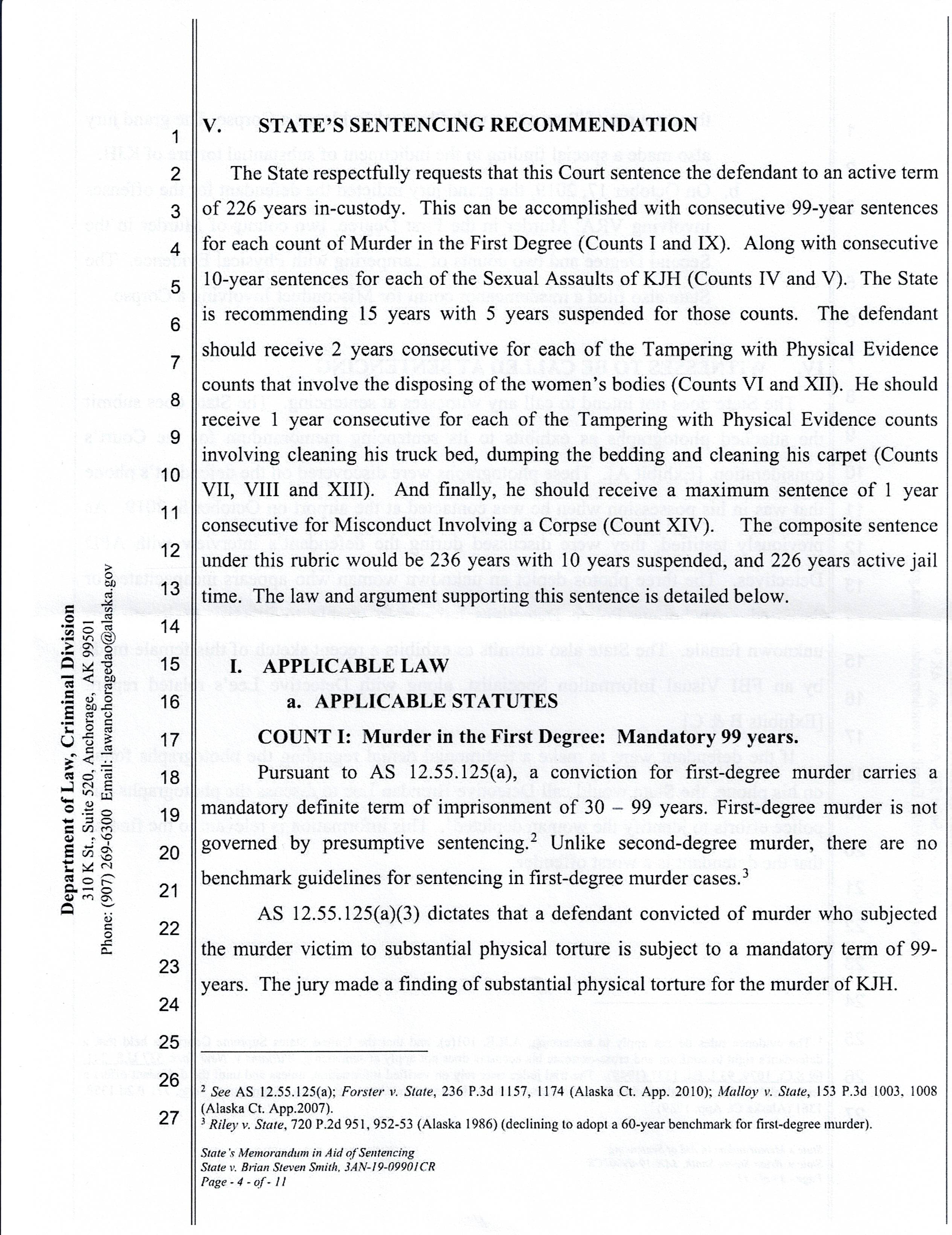
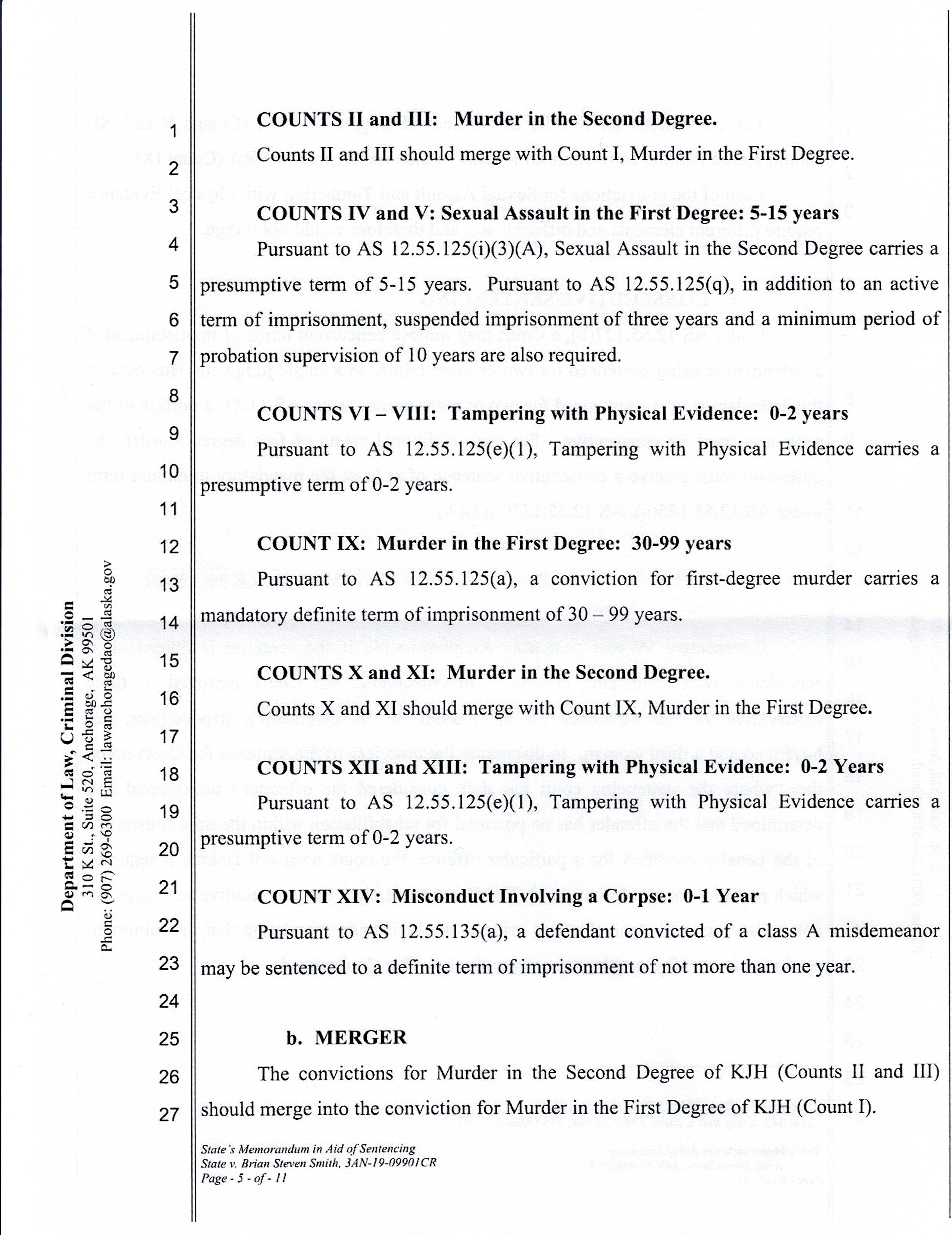
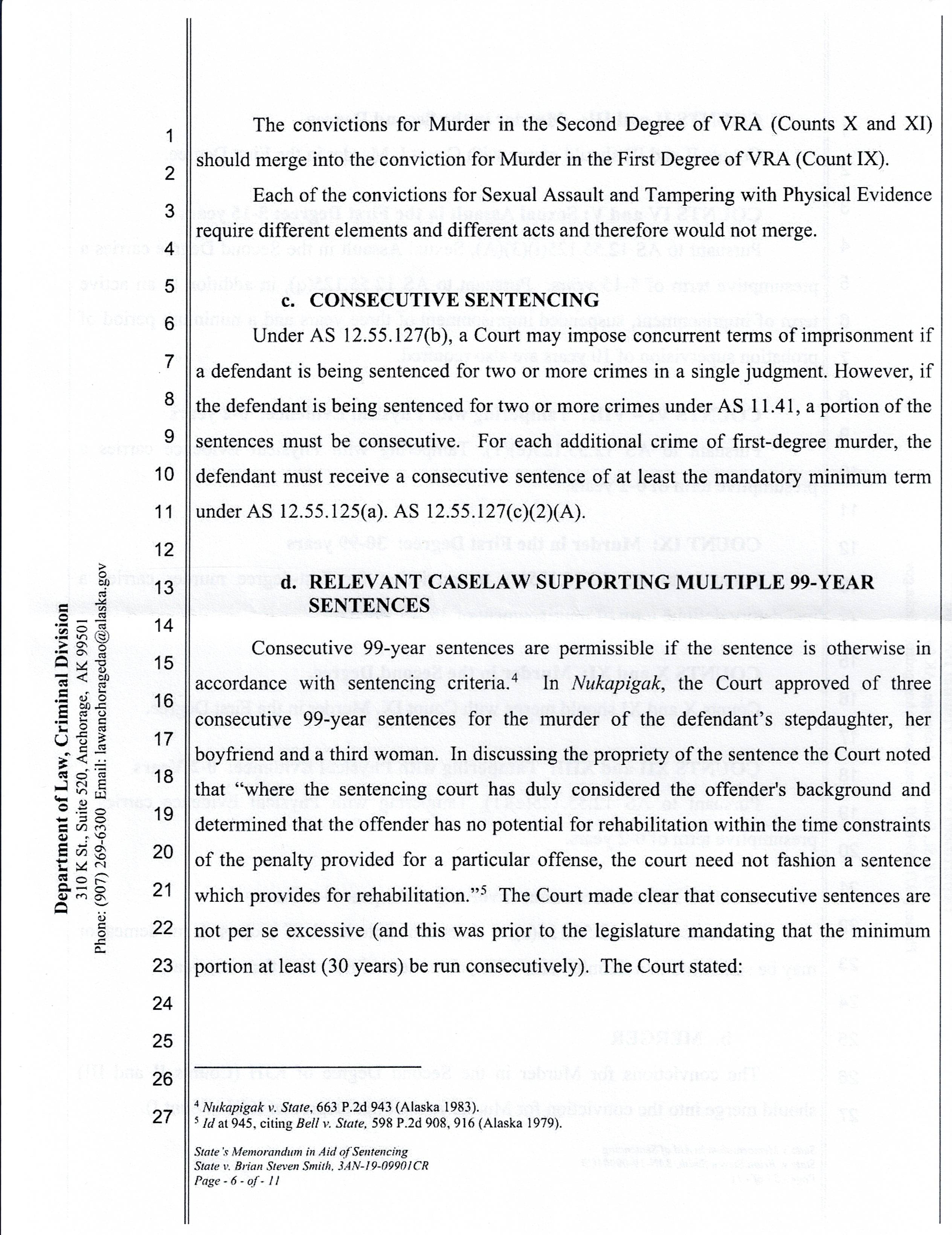
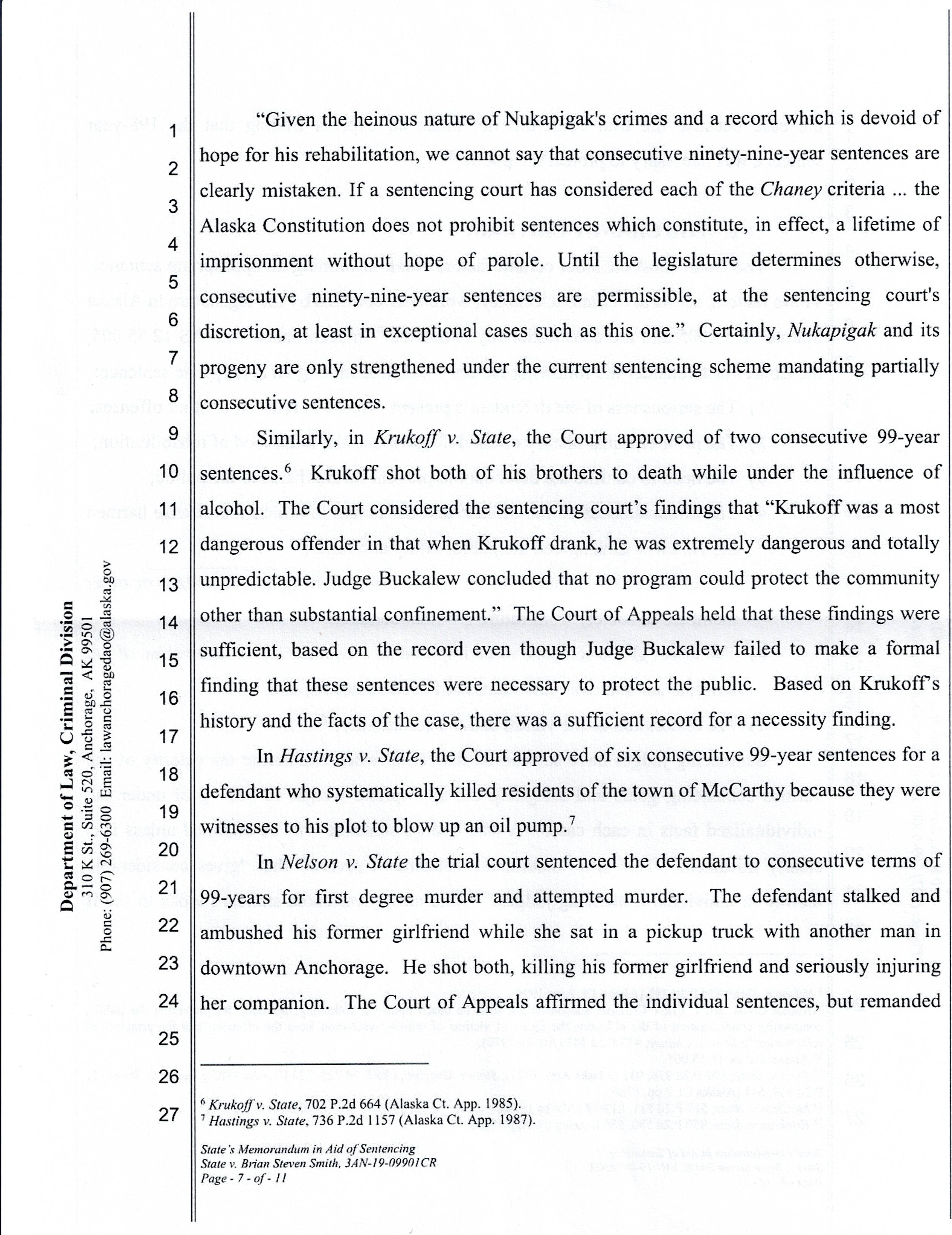

It was Friday. I hoped that no one from the various media publications that were in town for his sentencing next week would stumble upon the pictures and share them out to the public.
We had an idea of who it might have been, but decided to come together later than night on messager video call later.
On July 6, 2024, Michael Livingston contacted Anchorage Police Homicide Detective Brenden Lee to request that APD contact the Boskofsky family for identification because. We had matched physical descriptions of Cassandra Lee Boskofsky to the three graphic and disturbing crime scene images in the Sentencing Memorandum.
The Boskofsky family were shown images on Facebook Messenger by Detective Lee on July 6 and this resulted in an immediate identification of their missing loved one from the crime scene photos.
Wait. Let’s back up there.
The Boskofsky family were shown images on Facebook Messenger by a detective.
Facebook Messenger?
This is the best APD could do for a woman that they knew about 5 years before. They let those pictures sit in evidence on the phone, vague sentences in Smith’s paperwork, while her family waited for any news of their loved one. Having no idea that she was even a possible victim of this convicted murderer.
The family members that identified Cassandra were called in to speak to District Attorney Dunlop and Detective Lee the morning of Smith’s Sentencing, July 12, 2024.
During Smith’s sentencing and discussion of the Sentencing Memorandum, Judge Saxby was told the images of the woman in the crime scene photos had not been identified – as Cassandra’s family sat in the front row.
Cassandra’s case is one that speaks to the broader crisis of Missing and Murdered Indigenous Women in Alaska, and who the police deem as unimportant, which includes sex workers.
Smith was known to frequent areas where he knew the most marginalized would be, something he was very clear about in his interrogation at the time of his arrest.
Brian Steven Smith was reported to APD in August 2018 by Alicia Youngblood, a full year before his arrest.
This came about due to a video he had shown her, which was later confirmed during the interrogation a year later as the murder of Veronica Abouchuk.
At that time when Alicia Youngblood contacted police, even bringing them to the Eklutna Power Plant, where Smith had said he had brought the body, APD did not question Smith.
They also didn’t piece together the skull found in April 2019, seven months after Alicia had brought APD to that location, a skull found by mushroom pickers on a small road across from the Eklutna Power Plant.
Cassandra Lee Boskofsky was reported missing by her family members in August 2019.
This case highlights systemic issues that need to be remedied to ensure no more families suffer the pain of being unheard by police and left in the dark Cassandra’s family deserves answers, justice, and a full investigation into her disappearance and presumed murder. .
To date, APD has not released the sketch to the public.
Cassandra’s family filed in court for a presumptive death hearing.
It was a quiet Tuesday morning as a dozen of us gathered with signs before the hearing on the morning of September 3rd 2024.
We stood with signs that read “I wish APD would see PEOPLE and not COLOR” and many had shirts or hoodies with an image of Cassandra beaming an infectious smile, young, beautiful, loved.
Where is Cassandra? emblazoned above, Justice for Cassandra below.
During the hearing the family was able to question Detective Lee, a lead detective in the Brian Steven Smith investigation.
Lee said a search of Smith’s house turned up shoes that matched the ones worn in the photos believed to be Cassandra, answering “we have not been able to 100 percent identify the female in the photos as Cassandra. He went on to say that APD was not certain who the woman in the images was, without remains and positive identification, “We haven’t been able to 100 percent identify her.”
That afternoon a six person jury unanimously ruled Cassandra deceased, ruling her death as Death by Homicide.
Afterwards we gathered as a group, with tears of happiness and a sense of of justice, a small win, due to the ruling.
On a sunny afternoon in September the family hosted a service for Cassandra Lee Boskofsky at the St. Innocence Russian Orthodox Cathedral in Anchorage, Alaska. Downstairs friends and family shared stories of Cassandra, laughing and remembering the witty and fearless woman she was.
The court recognized Cassandra’s death, but what it failed to acknowledge was the system that allowed it to happen. The system that let a man walk free, despite the horrifying evidence. Under Alaska law, failing to report a violent crime is merely a violation. A slap on the wrist.
That has to change.
Cassandra’s case is not the first where silence allowed violence to continue unchecked, and it won’t be the last – unless something changes.
A proposed change in the statute, titled Kathleen’s Law seeks to strengthen AS 11.56.767, making the failure to report a violent crime a charge that carries real weight. It demands accountability from those who turn a blind eye to brutality. It is a necessary step to ensure that no more lives are lost to silence and inaction.
Veronica should still be here. Cassandra should still be here. Kathleen should still be here. We owe it to them, and to every victim still waiting for justice, to fight for change.
No more silence. No more loopholes.
 This Is How We Rise
Leave a reply to Anonymous Cancel reply